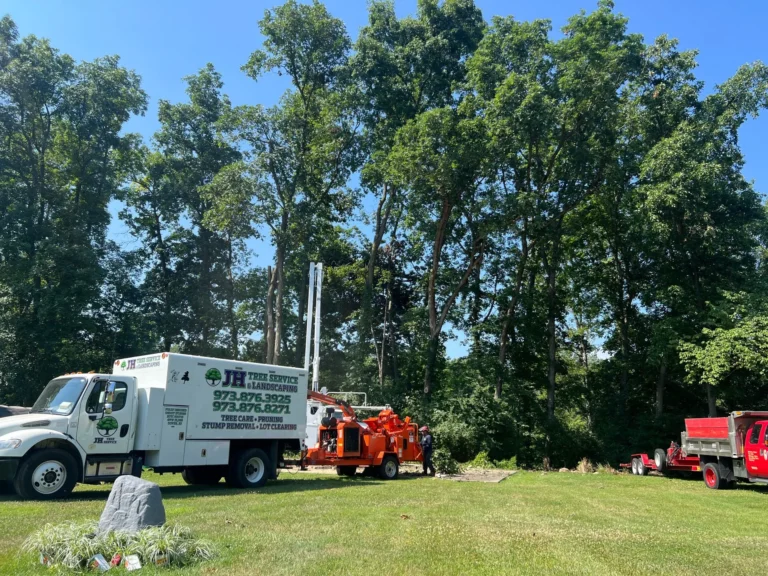
Tree removal in New Jersey typically costs between $300 and $5,000, with most homeowners paying $1,200 to $2,500 for a mid-size tree removed by a licensed contractor. Small trees under 30 feet start around $300 to $700, while large, complex removals requiring a crane or working near power lines can exceed $8,000. This guide breaks down what determines the price, what a legitimate written quote should include, and how JH Tree Service & Landscaping prices removals across Morris County and Northern NJ.
Written by the team at JH Tree Service, a licensed and insured tree care contractor serving Morris County since 2004. NJ Tree Care Operator License 831684.
Tree removal pricing in New Jersey runs higher than the national average for three reasons. First, labor and insurance costs in NJ are among the highest in the country. Second, mature hardwood species common in Morris County (oak, maple, ash) are dense and heavy, requiring more crew hours and equipment. Third, most Morris County properties have limited access, mature landscaping, and proximity to structures or utilities that increase job complexity.
The table below shows what JH Tree Service and other licensed Morris County contractors typically charge across three job tiers. These ranges cover the removal itself, ground cleanup, and brush chipping. Add-on services like stump grinding, wood haul-away, and crane rental are priced separately (see Section 4).
Job Tier | Typical Cost | What Is Included |
Basic Removal (small tree, easy access) | $300 – $900 | Tree removal up to 30 feet, brush chipping, general cleanup. Excludes stump grinding and wood removal. |
Mid-Range Removal (medium tree, moderate complexity) | $900 – $2,500 | Removal of trees 30 to 60 feet tall, stump grinding to grade included, full property cleanup. Excludes wood haul-away and permit costs. |
Premium / Complex Removal (large, hazardous, or crane-required) | $2,500 – $8,000+ | Removal of trees 60+ feet or trees near structures, utilities, or with hazardous conditions. Includes crane rental where needed, specialized rigging, permit handling, and insurance documentation coordination. |
These ranges represent typical residential jobs. Commercial removals, multi-tree property clearing, and post-storm emergency response can fall outside these ranges depending on scope. JH Tree Service provides free written quotes for every job, so the number on your quote is the number you pay with no surprise upcharges.
Two trees of the same species and height can be priced very differently based on the factors below. When evaluating a written quote, understanding these variables helps you know whether the price is fair for the specific job at your property.
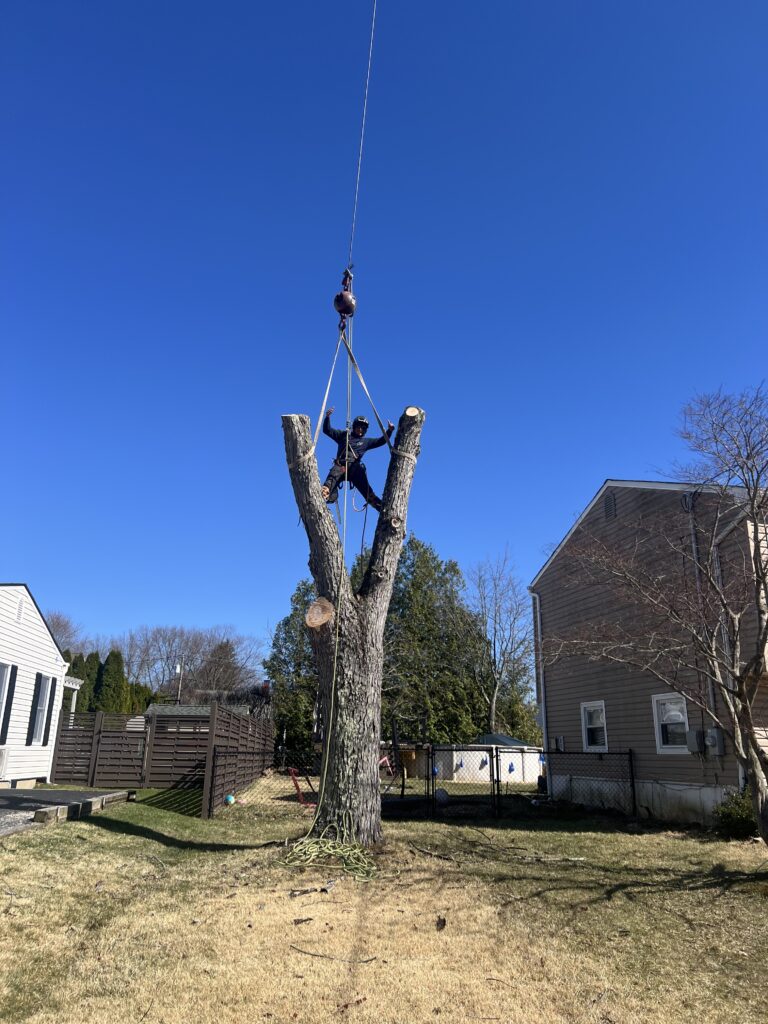
Height is the single biggest cost driver. A 20-foot tree can often be dropped in one piece by a two-person crew in under an hour. A 70-foot tree requires sectional dismantling from the top down, roping each section to control the fall, and multiple crew members working in coordination. Trunk diameter matters at removal time too, since a wider trunk requires more cutting time and heavier equipment to haul the sections out.
Hardwood species like oak, hickory, and maple weigh significantly more than softwoods like pine or hemlock at the same size. Heavier wood means more crew time, more equipment wear, more truck loads to remove, and higher disposal costs. See Section 3 for species-by-species pricing common in Morris County.
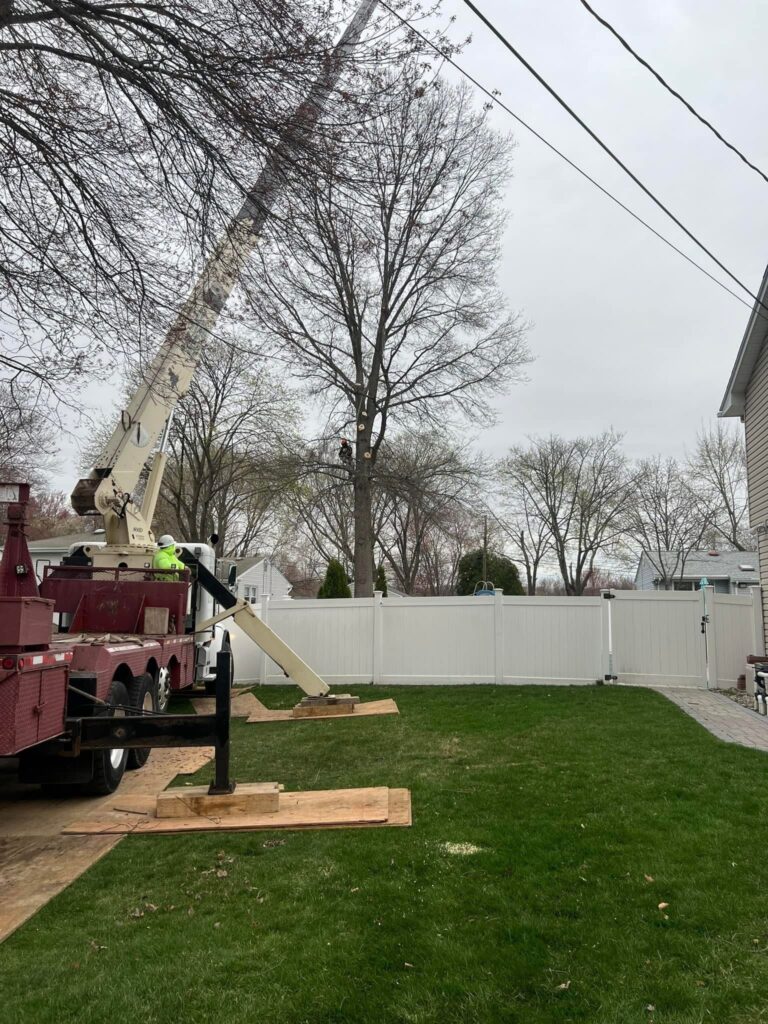
Trees in an open front yard with driveway access are the cheapest to remove. Trees in a fenced backyard, on a slope, next to a pool, or between houses cost significantly more because equipment cannot get close and everything must be carried by hand. Trees requiring a crane parked on the street cost the most because crane rental adds $500 to $2,500 per day depending on the reach required.
Dead and diseased trees are more dangerous to remove because the wood is brittle and unpredictable. Dead oaks and dying ash trees affected by the Emerald Ash Borer (widespread across NJ since 2014) require slower, more careful dismantling. Expect a 15% to 30% premium over the same species in healthy condition.
A tree in the middle of an open field can be felled in one piece. A tree next to your house, garage, or fence has to be sectioned from the top down with each piece roped to the ground. Trees within 10 feet of power lines require coordination with the utility company (JCP&L or PSE&G) and add both time and complexity to the job. Trees touching or overhanging power lines cannot be removed by any contractor until the utility de-energizes the line.
A planned removal scheduled two weeks out costs the base price. An emergency response for a tree on your house, a tree blocking your driveway after a storm, or a tree that just fell across power lines runs 25% to 50% more because the crew is being dispatched immediately, working outside normal hours in some cases, and typically dealing with hazardous conditions. JH Tree Service answers emergency calls 24/7 and can usually reach a Morris County property within the hour.
Most removal quotes do NOT include stump grinding by default. Stump grinding is usually a separate line item. See Section 4 for stump grinding cost details. If you want the stump gone entirely so you can replant grass, plan on adding $150 to $500 per stump to your total.
Some Morris County towns require permits for removing trees over a certain diameter, particularly in historic districts or on properties with ordinance-protected species. See Section 6 for the current permit landscape across Morris County. JH Tree Service handles permit applications as part of the job when required, so this rarely becomes a homeowner-managed step.
Morris County residential properties feature a specific mix of tree species reflecting the region’s oak-hickory hardwood forest ecology plus decades of landscaping choices. The table below covers the species JH Tree Service most often removes, with typical price ranges for a mature tree in average condition.
Tree Species | Typical Cost Range | Notes |
Oak (red, white, black) | $800 – $4,500 | The dominant NJ hardwood. Heavy wood, deep root systems, often 60 to 90 feet tall on mature residential lots. |
Maple (silver, red, sugar) | $600 – $3,500 | Silver maples are notoriously brittle and prone to split trunks. Common cause of insurance claim removals in Morris County. |
Ash (white, green) | $800 – $4,000 | Nearly every ash tree in NJ has been killed by the Emerald Ash Borer. Dead ash is dangerous and unpredictable, requiring careful sectional removal. |
Pine (white pine, hemlock) | $500 – $3,000 | Lighter wood makes removal faster, but pines often grow very tall (80+ feet) and near houses, offsetting the wood-weight savings. |
Cherry | $500 – $2,500 | Ornamental cherries are usually smaller and easier to remove. Wild black cherry can grow much larger and shift into mid-range pricing. |
Elm | $700 – $3,500 | Dutch Elm Disease has thinned the elm population but survivors can be very large. Wood is dense and stringy, adding to removal time. |
Willow | $600 – $3,500 | Common near ponds and low-lying yards in Morris County. Wide root systems and heavy limbs make cleanup extensive. |
Fruit trees (apple, pear, dogwood) | $300 – $1,500 | Typically the least expensive residential removals due to smaller size and lighter wood. Often no crane needed. |
If you have a dying ash tree on your Morris County property, do not delay removal. The Emerald Ash Borer has killed nearly every mature ash in the region, and dead ash becomes structurally unpredictable within one to two years of dying. A dead ash near your house is one of the highest-priority removals a homeowner can schedule.
Most tree removal quotes cover the tree itself plus general cleanup. Everything below is priced separately and should appear as its own line item on your written quote. If a contractor gives you a bundled verbal price without itemizing, ask for a written breakdown before signing anything.
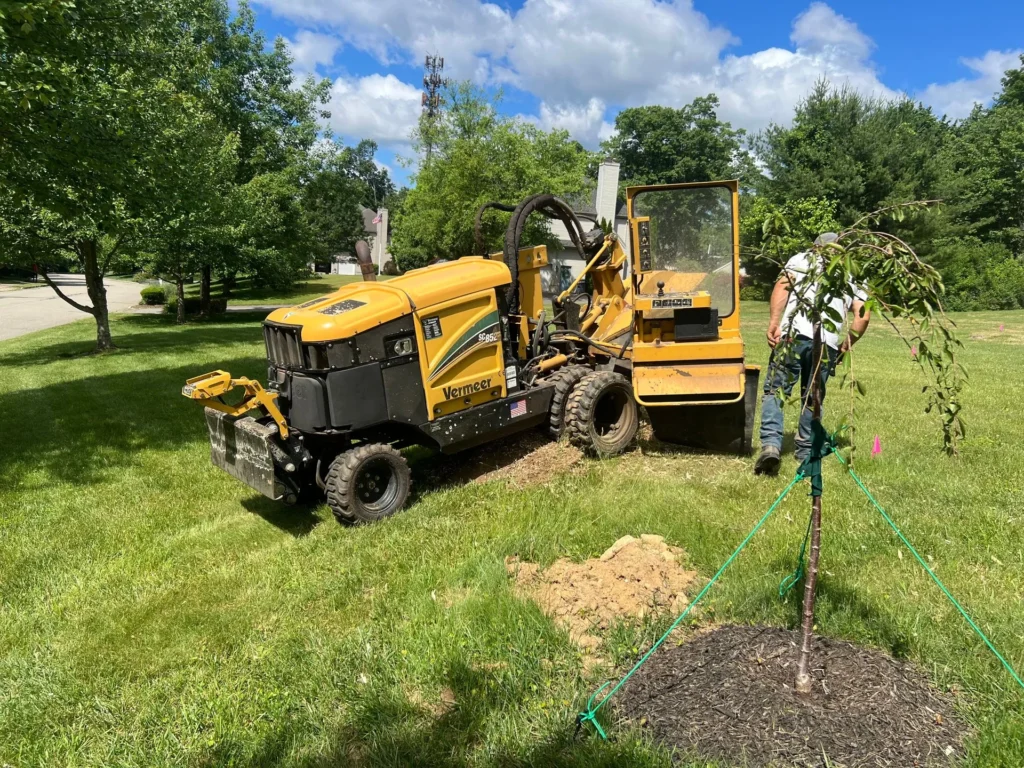
Stump grinding uses a machine to grind the stump down 4 to 12 inches below ground level, then rakes the wood chips into the hole for backfill. This is the most common stump treatment in Morris County. Pricing depends primarily on stump diameter (per inch pricing runs around $3 to $5). Larger stumps and stumps in areas with buried utilities may run higher.
Full extraction pulls the entire stump and major root system out of the ground with excavation equipment. Used when the area will be repaved, when a new tree will be planted in the same spot, or when the stump is diseased and the root system needs to leave the property. More disruptive to surrounding landscaping than grinding.
If you want the wood removed rather than left on your property, expect a haul-away charge. Some homeowners keep the wood for firewood, which reduces total cost. JH Tree Service can leave logs cut to firewood length as part of the base removal, or haul everything off for the fee above.
If you want the wood processed into ready-to-burn firewood, most contractors including JH offer this as an add-on. Splitting is time-consuming and pricing reflects hours of chainsaw and splitter work.
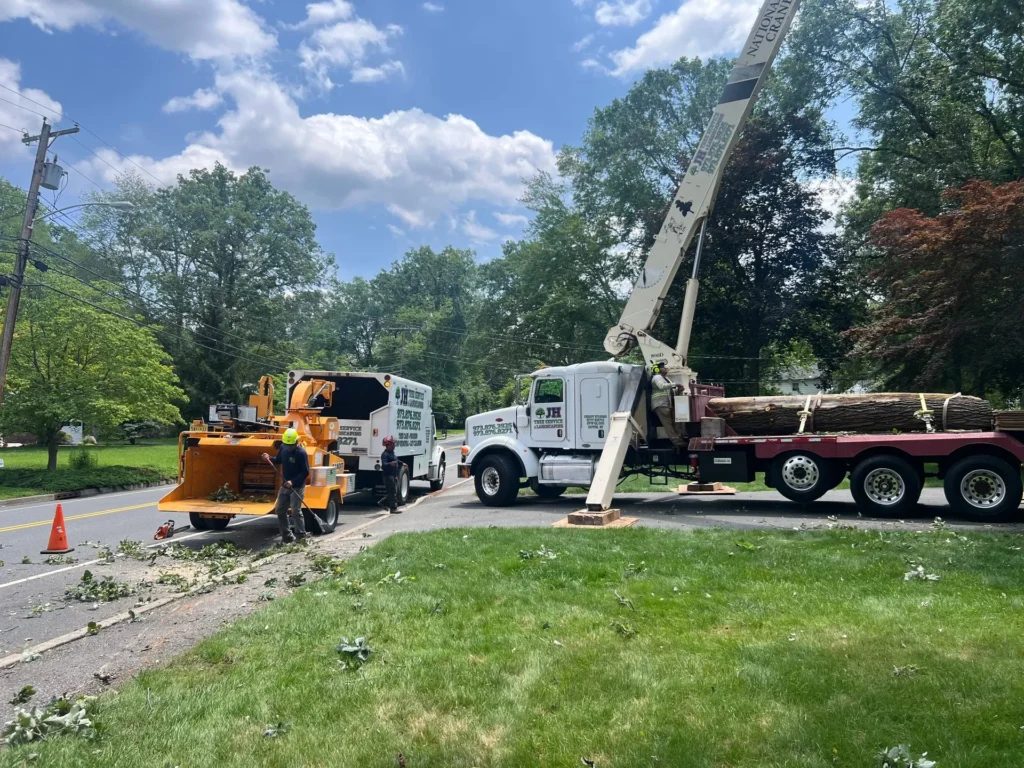
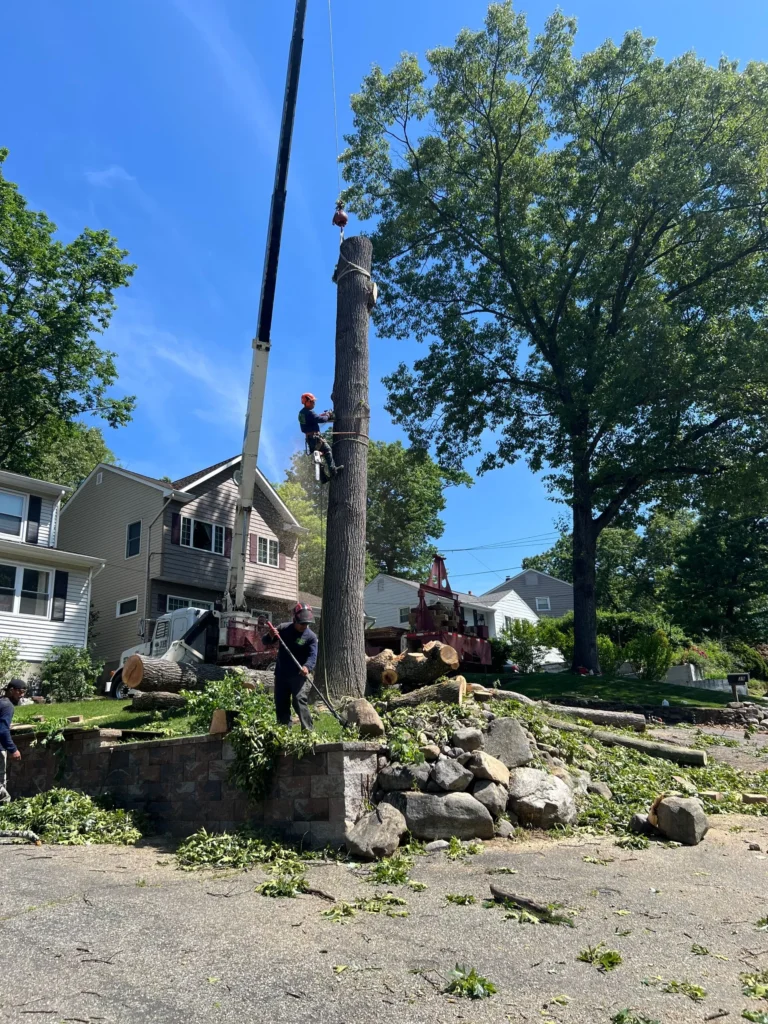
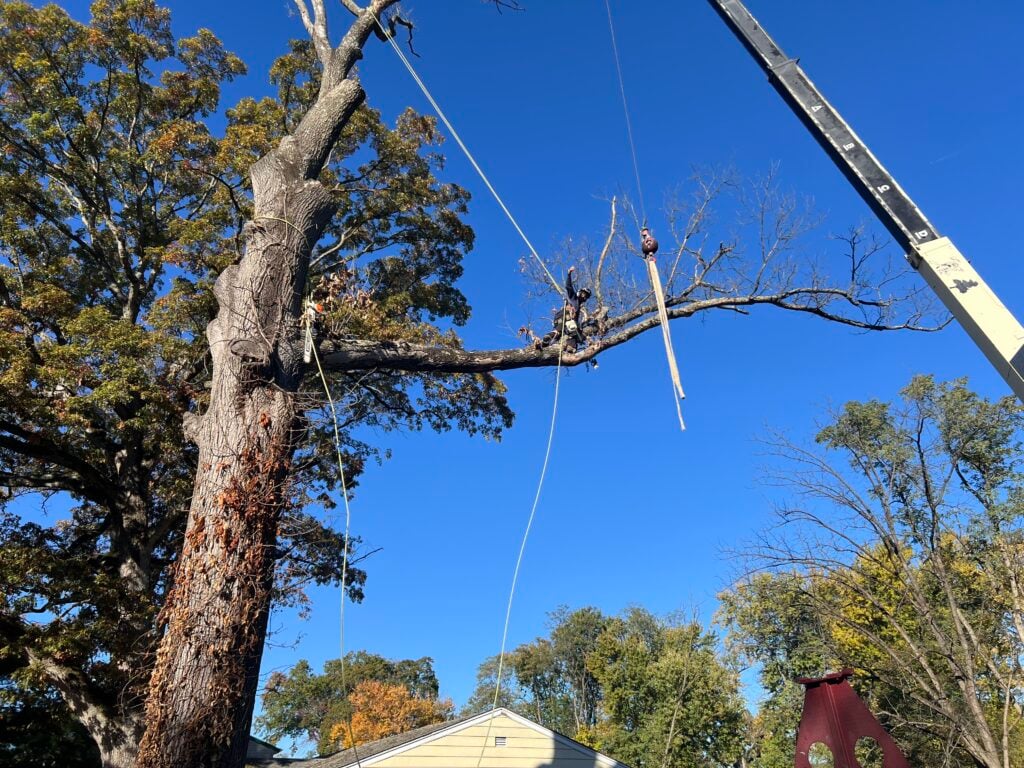
Cranes become necessary when a tree is too large to safely section down using ropes alone, when the tree is next to a structure that cannot be risked, or when access prevents traditional felling. Crane costs include the crane, the operator, and the setup and tear-down time. Larger reach cranes (needed for trees deep in a backyard) run at the top of the range.
Emergency response for storm damage, tree on structure, tree on vehicle, or tree blocking access adds 25% to 50% to the base removal cost. This covers immediate dispatch, working outside normal hours, and the additional risk of hazardous conditions.
For removals covered by homeowners insurance, JH Tree Service provides photo documentation, itemized invoices, and direct communication with your insurance adjuster at no additional charge. Not every contractor does this, so confirm before hiring if you are filing a claim.
This is one of the most common questions homeowners ask after a storm. The short answer: insurance covers tree removal when the tree has caused damage to a covered structure. It usually does not cover removal of a fallen tree that didn’t hit anything, or preventive removal of a tree that might fall someday.
JH Tree Service works directly with homeowners insurance adjusters across all major NJ carriers including State Farm, Allstate, Liberty Mutual, Geico, Travelers, and Nationwide. We provide the photo documentation and itemized quotes adjusters need to approve claims quickly, and we bill the insurance company directly when the policy allows.
New Jersey does not have a statewide tree removal permit requirement, but many individual towns and counties do. Requirements vary significantly by municipality, and Morris County has some of the strictest tree ordinances in the state due to its watershed protection zones and historic district designations.
JH Tree Service handles permit applications as part of any job that requires one, so this rarely becomes something the homeowner has to manage. Before signing any tree removal contract in Morris County, verify with your contractor that permits are their responsibility, not yours.
Sometimes what looks like a minor problem is actually a signal that the tree needs to come down entirely. The warning signs below indicate structural failure risk that trimming alone cannot fix.
A few dead branches on a mature tree are normal. But when dead wood covers 15% or more of the canopy, the tree is in serious decline. At 25% or higher, most arborists recommend removal because the tree is unlikely to recover and the dead sections pose falling hazards.
A visible cavity in the trunk, soft or crumbling wood, or mushroom growth at the base or on the trunk indicates internal decay. Once the trunk is compromised, the tree cannot be saved by trimming, and each storm increases the risk of trunk failure.
A tree that has always leaned slightly and shows no root disturbance is usually fine. But a tree that has recently started leaning, or where the lean is visibly increasing, indicates root system failure. Recent leans are urgent removals, especially if the tree is leaning toward a house, driveway, or power line.
Roots damaged by construction, driveway paving, trenching, or grade changes cannot be repaired. Root damage weakens the tree’s anchoring, and the tree may fail during the next major wind event even if it looks fine above ground.
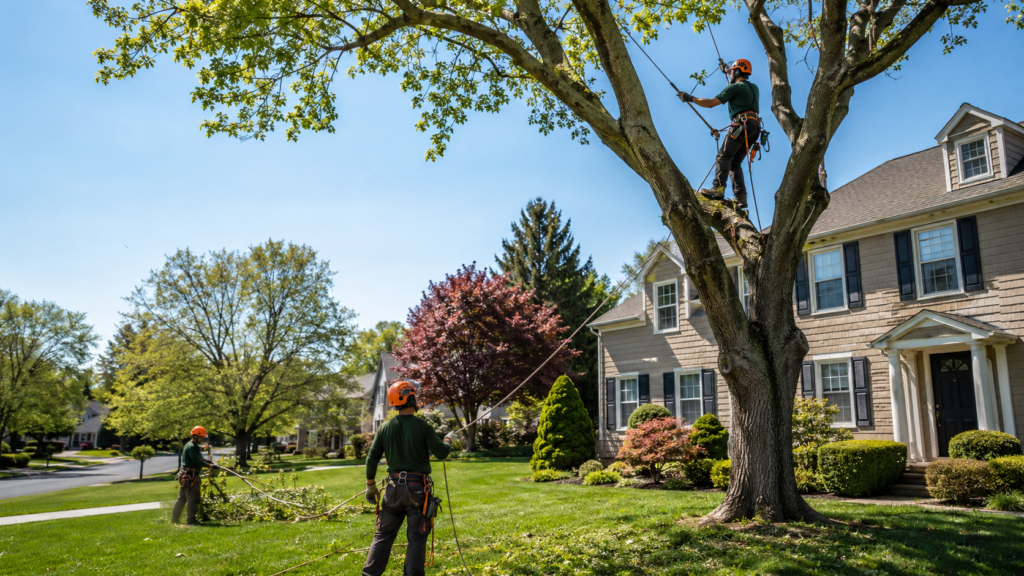
Homeowners occasionally consider felling their own trees to save money. In almost every case, this is a mistake. The risks include serious injury, property damage, insurance complications, and violations of local ordinances.
If a DIY tree removal causes damage to your house, your neighbor’s property, or a vehicle, your homeowners insurance may deny the claim on grounds that a licensed contractor was not used. A licensed tree service carries commercial general liability and workers compensation insurance that covers property damage and worker injury during the job. A homeowner has neither.
A visible cavity in the trunk, soft or crumbling wood, or mushroom growth at the base or on the trunk indicates internal decay. Once the trunk is compromised, the tree cannot be saved by trimming, and each storm increases the risk of trunk failure.
Renting or buying the equipment for a mid-size tree removal (chainsaw, climbing gear, rigging ropes, chipper, hauling truck) often costs more than hiring a licensed contractor to do the whole job. And unlike a professional crew, a homeowner using rented equipment has no efficiency, no leverage, and no fallback plan when something goes wrong.
Even a legal DIY removal requires disposal of the wood and brush. Most Morris County towns do not allow tree waste in curbside pickup, and dump fees for a single mature tree can exceed $200. A licensed contractor’s price already includes disposal.
The written quote you get from a tree service should include enough detail that you can compare quotes fairly and verify the work matches what you paid for. Below is what a legitimate quote should contain, and the red flags that indicate a contractor to avoid.
Every JH Tree Service quote is written, itemized, and delivered in English or Spanish based on your preference. The number on the quote is the number you pay, with no surprise upcharges when the job is finished. Quotes are free, non-obligatory, and delivered within 24 to 48 hours of your initial contact. Written documentation is formatted so it can be submitted directly to an insurance adjuster if the removal is being filed as a claim.
JH Tree Service & Landscaping has served Morris County and Northern NJ since 2004, with owner Jorge personally handling every estimate, quote, and on-site walkthrough. Below is what makes JH different from most tree service contractors in the area.
Tree removal in New Jersey costs between $300 and $8,000 depending on tree size, species, access, and job complexity. Most residential removals fall between $900 and $2,500 for mid-size trees. Small trees under 30 feet start around $300 to $900. Large trees over 60 feet, or trees requiring crane access, typically run $2,500 to $5,500 or more. Emergency removals add 25% to 50% to base pricing.
Homeowners insurance in NJ typically covers tree removal when the tree has damaged a covered structure such as a house, garage, fence, or car. Insurance does not usually cover preventive removal of dead or dying trees, removal of a tree that fell without hitting anything, or aesthetic removal. If a tree fell on your house or a covered structure, contact your insurance company immediately and get a written estimate from a licensed contractor before signing any tree service contract.
Removing a large oak tree in Morris County typically costs $1,500 to $4,500 depending on height, trunk diameter, access to the tree, and proximity to structures or power lines. Oaks are dense hardwood and heavy, so they take longer to remove than pines or maples of the same size. A 70-foot oak in a fenced backyard with limited access can run $3,500 to $5,000. A 40-foot oak in an open yard with driveway access typically runs $1,500 to $2,500.
Permit requirements vary by town in Morris County. Trees over a certain trunk diameter (commonly 6 to 12 inches DBH) may require permits, especially in historic districts, watershed zones, or on properties with ordinance-protected species. Dead and hazardous trees are typically exempt, as are emergency removals after storms. JH Tree Service handles permit applications as part of any job that requires one, so this rarely becomes a homeowner-managed step.
Tree removal pricing reflects the labor, insurance, and equipment costs of safely dismantling a large living structure that is often near houses, power lines, or other trees. Licensed contractors carry commercial liability and workers compensation insurance, which alone can run $30,000 to $80,000 per year for a small tree service company. Add specialized equipment (bucket trucks, cranes, chippers), certified crew labor, disposal fees, and permit costs, and the total per-job cost of doing the work legally in NJ is substantially higher than the price of the tree itself would suggest.
Most residential tree removals take between 2 and 8 hours from crew arrival to final cleanup. A small tree with easy access can be complete in under 2 hours. A large tree requiring sectional dismantling, roping, and crane assistance can take a full day, and very large or complex jobs may extend into a second day. JH Tree Service scheduling includes cleanup time in every quote, so the property is left ready to use when the crew leaves.
Tree removal is the process of cutting down and removing the standing tree. Stump grinding is a separate service that grinds the remaining stump 4 to 12 inches below ground level using a specialized machine. Most tree removal quotes do NOT include stump grinding by default, so if you want the stump gone, confirm this is a line item on your quote. Stump grinding typically adds $150 to $500 per stump to the total cost.
Yes. JH Tree Service replies to every estimate request within the same business day. For urgent situations including storm damage, hazardous leaning trees, or trees on structures, we can dispatch a crew for on-site assessment the same day. For scheduled residential removals, on-site walkthroughs are typically completed within 24 to 48 hours of your initial call. Call (973) 836-5458 or submit the contact form on JHTreeServiceNJ.com to request a free written quote.
JH Tree Service & Landscaping provides free, written, itemized tree removal quotes across Morris County and Northern NJ. We reply to every inquiry within the same business day, with on-site walkthroughs typically scheduled inside 24 to 48 hours. For storm damage and tree emergencies, call directly, we answer 24/7 in English and Spanish.
Call: (973) 836-5458
Text: (973) 836-5458
Online: Submit the contact form at JHTreeServiceNJ.com/contact/
License: NJ Tree Care Operator License 831684. Licensed, insured, bilingual.